Читать бесплатно онлайн
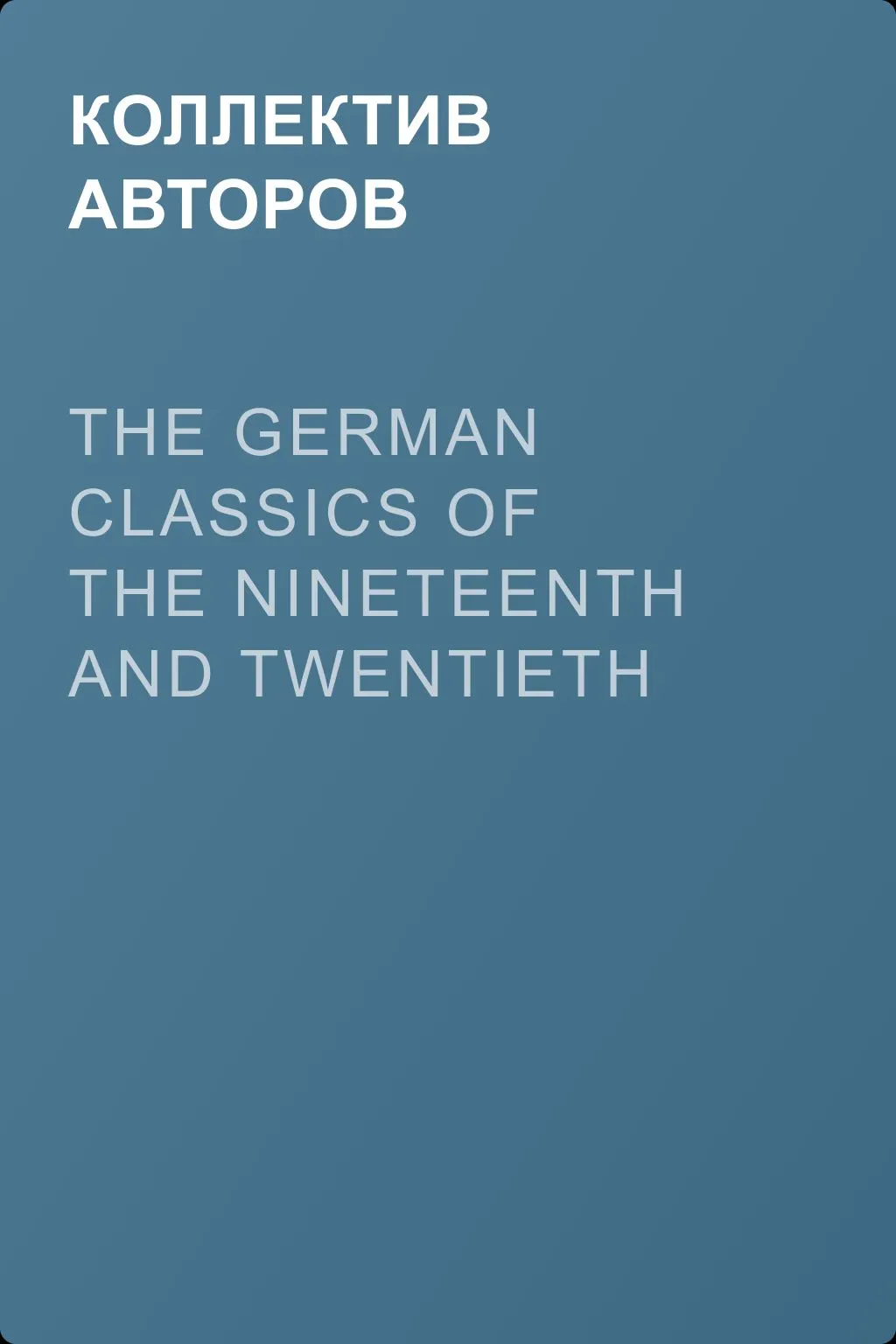
The German Classics of the Nineteenth and Twentieth Centuries, Volume 08
Автор Коллектив авторов0+
Удобнее читать в приложении
AI-разбор доступен после входа
Суть книги, пересказ, главный конфликт, ключевые идеи, вывод, кому полезна, главные темы, персонажи и цитаты можно получить после входа в BookRa.
auto_awesomeПолучить AI-разборО книге
Дата написания1970-01-01
Язык книгиen
Возрастное ограничение0+
Читать онлайн
Страница 1 из 135The German Classics of the Nineteenth and Twentieth Centuries, Volume 08 / Masterpieces of German Literature Translated into English
EDITOR'S NOTE
This volume, containing chiefly masterpieces of the Novel of Provincial Life, is illustrated by the principal works of one of the foremost painters of German peasant life, Benjamin Vautier. These picture's have been so arranged as to bring out in natural succession typical situations in the career of an individual from the cradle to the grave. In order not to interrupt this succession, Auerbach's Little Barefoot, likewise illustrated by Vautier, has been placed before Gotthelf's Uli, The Farmhand, although Gotthelf, and not Auerbach, is to be considered as the real founder of the German village story.
The frontispiece, Karl Spitzweg's Garret Window, introduces a master of German genre painting who in a later volume will be more fully represented.
THE NOVEL OF PROVINCIAL LIFE
By EDWIN C. ROEDDER, PH.D.
Associate Professor of German Philology, University of Wisconsin
To Rousseau belongs the credit of having given, in his passionate cry "Back to Nature!" the classic expression to the consciousness that all the refinements of civilization do not constitute life in its truest sense. The sentiment itself is thousands of years old. It had inspired the idyls of Theocritus in the midst of the magnificence and luxury of the courts of Alexandria and Syracuse. It reëchoed through the pages of Virgil's bucolic poetry. It made itself heard, howsoever faintly, in the artificiality and sham of the pastoral plays from the sixteenth to the eighteenth century. And it was but logical that this sentiment should seek its most adequate and definitive expression in a portrayal of all phases of the life and fate of those who, as the tillers of the soil, had ever remained nearer to Mother Earth than the rest of humankind.
Not suddenly, then, did rural poetry rise into being; but while its origin harks back to remote antiquity it has found its final form only during the last century. In this its last, as well as its most vigorous, offshoot, it presents itself as the village story—as we shall term it for brevity's sake—which has won a permanent place in literature by the side of its older brothers and sisters, and has even entirely driven out the fanciful pastoral or village idyl of old.
The village story was bound to come in the nineteenth century, even if there had been no beginnings of it in earlier times, and even if it did not correspond to a deep-rooted general sentiment. The eighteenth century had allowed the Third Estate to gain a firm foothold in the domain of dignified letters; the catholicity of the nineteenth admitted the laborer and the proletarian. It would have been passing strange if the rustic alone had been denied the privilege. An especially hearty welcome was accorded to the writings of the first representatives of the new species. Internationalism, due to increased traffic, advanced with unparalleled strides in the third and fourth decades. The seclusion of rural life seemed to remain the quiet and unshakable realm of patriarchal virtue and venerable tradition. The political skies were overcast with the thunder clouds of approaching revolutions; France had just passed through another violent upheaval. Village conditions seemed to offer a veritable haven of refuge. The pristine artlessness of the peasant's intellectual, moral, and emotional life furnished a wholesome antidote to the morbid hyperculture of dying romanticism, the controversies and polemics of Young Germany, and the self-adulation of the society of the salons. Neither could the exotic, ethnographic, and adventure narratives in the manner of Sealsfield, at first enthusiastically received, satisfy the taste of the reading public for any length of time—at best, these novels supplanted one fashion by another, if, indeed, they did not drive out Satan by means of Beelzebub. And was it wise to roam so far afield when the real good was so close at hand? Why cross oceans when the land of promise lay right before one's doors? All that was needed was the poet discoverer.
The Columbus of this new world shared the fate of the great Genoese in more than one respect. Like him, he set out in quest of shores that he was destined never to reach. Like him, he discovered, or rather rediscovered, a new land. Like him, he so far outstripped his forerunners that they sank into oblivion. Like Columbus, who died without knowing that he had not reached India, the land of his dreams, but found a new world, he may have departed from this life in the belief that he had been a measurably successful social reformer when he had proved to be a great epic poet. Like Columbus, he was succeeded by his Amerigo Vespucci, after whom his discovery was named. The Columbus of the village story is the Swiss clergyman Albert Bitzius, better known by his assumed name as Jeremias Gotthelf; the Amerigo Vespucci is his contemporary Berthold Auerbach.
The choice of his nom de guerre is significant of Jeremias Gotthelf's literary activity. He regarded himself as the prophet wailing the misery of his people, who could be delivered only through the aid of the Almighty. It never occurred to him to strive for literary fame. He considered himself as a teacher and preacher purely and simply; in a measure, as the successor of Pestalozzi, who, in his Lienhard und Gertrud (1781-1789), had created a sort of pedagogical classic for the humbler ranks of society; and if there be such a thing in Gotthelf's make-up as literary influence, it must have emanated from the sage of Burgdorf and Yverdun. To some extent also Johann Peter Hebel (1760-1826), justly famed for his Alemannian dialect poems, may have served him as a model, for Hebel followed an avowedly educational purpose in the popular tales of his Schatzkästlein des rheinischen Hausfreunds ("Treasure Box of the Rhenish Crony"), of which it has been said that they outweigh tons of novels.
Gotthelf's intention was twofold: to champion the cause of the rustic yeomanry in the threatening of its peculiar existence—for the radical spirit of the times was already seizing and preying upon the hallowed customs of the peasantry's life—and to fight against certain inveterate vices of the rural population itself that seemed to be indigenous to the soil. As the first great social writer of the German tongue, he is not content to make the rich answerable for existing conditions, but labors with all earnestness to educate the lower classes toward self-help. At first he appeared as an uncommonly energetic, conservative, polemic author in whose views the religious, basis of life and genuine moral worth coincided with the traditional character of the country yeomanry. A more thorough examination revealed to his readers an original epic talent of stupendous powers. He was indeed eminently fitted to be an educator and reformer among his flock by his own nobility of character, his keen knowledge and sane judgment of the people's real needs and wants, his warm feeling, and his unexcelled insight into the peasant's inner life. Beyond that, however, he was gifted with exuberant poetic imagination and creative power, with an intuitive knowledge of the subtlest workings of the emotional life, and a veritable genius for finding the critical moments in an individual existence.
Вам также может понравиться
{"page":{"canonicalUrl":"https://bookra.app/books/1WGZ14tL","pageTitle":"The German Classics of the Nineteenth and Twentieth Centuries, Volume 08 (Коллектив авторов) — полный текст, краткое содержание, анализ и герои","metaDescription":"Полный текст книги «The German Classics of the Nineteenth and Twentieth Centuries, Volume 08». А также краткое содержание, главные мысли, конфликт, темы, персонажи, цитаты и ответы на вопросы.","headingTitle":"«The German Classics of the Nineteenth and Twentieth Centuries, Volume 08». Читать бесплатно онлайн","headingSubtitle":"Коллектив авторов","structuredData":[{"@context":"https://schema.org","@type":"BreadcrumbList","@id":"https://bookra.app/books/1WGZ14tL#breadcrumb","itemListElement":[{"@type":"ListItem","position":1,"name":"BookRa","item":"https://bookra.app/"},{"@type":"ListItem","position":2,"name":"зарубежная классика","item":"https://bookra.app/genre/5214"},{"@type":"ListItem","position":3,"name":"The German Classics of the Nineteenth and Twentieth Centuries, Volume 08","item":"https://bookra.app/books/1WGZ14tL"}]},{"@context":"https://schema.org","@type":"WebPage","@id":"https://bookra.app/books/1WGZ14tL","url":"https://bookra.app/books/1WGZ14tL","name":"«The German Classics of the Nineteenth and Twentieth Centuries, Volume 08». Читать бесплатно онлайн","description":"Полный текст книги «The German Classics of the Nineteenth and Twentieth Centuries, Volume 08». А также краткое содержание, главные мысли, конфликт, темы, персонажи, цитаты и ответы на вопросы.","breadcrumb":{"@id":"https://bookra.app/books/1WGZ14tL#breadcrumb"},"mainEntity":{"@id":"https://bookra.app/books/1WGZ14tL#work"},"primaryImageOfPage":{"@type":"ImageObject","url":"https://storage.yandexcloud.net/bookra-catalog-pd-public/content/b0cb78ff-a43a-11e8-aa6b-0cc47a520474/thumbs/1200.webp"}},{"@context":"https://schema.org","@type":"Book","@id":"https://bookra.app/books/1WGZ14tL#work","name":"The German Classics of the Nineteenth and Twentieth Centuries, Volume 08","url":"https://bookra.app/books/1WGZ14tL","description":"Полный текст книги «The German Classics of the Nineteenth and Twentieth Centuries, Volume 08». А также краткое содержание, главные мысли, конфликт, темы, персонажи, цитаты и ответы на вопросы.","image":"https://storage.yandexcloud.net/bookra-catalog-pd-public/content/b0cb78ff-a43a-11e8-aa6b-0cc47a520474/thumbs/1200.webp","inLanguage":"en","genre":["зарубежная классика","зарубежная старинная литература"],"sameAs":["https://litres.ru/book/raznoe-4340152/the-german-classics-of-the-nineteenth-and-twentieth-centuri-36362374/"],"author":[{"@type":"Person","@id":"https://bookra.app/author/9980df13-0ec7-11e4-824d-0025905a06ea#person","name":"Коллектив авторов","url":"https://bookra.app/author/9980df13-0ec7-11e4-824d-0025905a06ea"}],"about":[{"@type":"Thing","name":"зарубежная классика"},{"@type":"Thing","name":"зарубежная старинная литература"},{"@type":"Thing","name":"чтение онлайн"},{"@type":"Thing","name":"саммари"},{"@type":"Thing","name":"AI-разбор"},{"@type":"Thing","name":"персонажи"},{"@type":"Thing","name":"цитаты"}],"workExample":{"@type":"Book","@id":"https://bookra.app/books/1WGZ14tL#edition","url":"https://bookra.app/books/1WGZ14tL","bookFormat":"https://schema.org/EBook","inLanguage":"en","sameAs":["https://litres.ru/book/raznoe-4340152/the-german-classics-of-the-nineteenth-and-twentieth-centuri-36362374/"],"isAccessibleForFree":true,"potentialAction":{"@type":"ReadAction","name":"Читать бесплатно онлайн «The German Classics of the Nineteenth and Twentieth Centuries, Volume 08»","target":{"@type":"EntryPoint","urlTemplate":"https://bookra.app/books/1WGZ14tL","actionPlatform":["https://schema.org/DesktopWebPlatform"]},"expectsAcceptanceOf":{"@type":"Offer","category":"nologinrequired"}}}}],"book":{"idCatalog":764377,"shortId":"1WGZ14tL","title":"The German Classics of the Nineteenth and Twentieth Centuries, Volume 08","coverUrl":"https://storage.yandexcloud.net/bookra-catalog-pd-public/content/b0cb78ff-a43a-11e8-aa6b-0cc47a520474/thumbs/1200.webp","annotationText":"","catalogType":"PUBLIC_DOMAIN","catalogTypeLabel":"Общественное достояние","authorLine":"Коллектив авторов","authors":[{"id":"9980df13-0ec7-11e4-824d-0025905a06ea","displayName":"Коллектив авторов","protectedUrl":"/author/9980df13-0ec7-11e4-824d-0025905a06ea","wikipediaUrl":null,"wikidataUrl":null}],"genres":[{"id":5214,"title":"зарубежная классика","token":null,"publicUrl":"https://bookra.app/genre/5214"},{"id":5215,"title":"зарубежная старинная литература","token":null,"publicUrl":"https://bookra.app/genre/5215"}],"keywords":[],"facts":[{"key":"dateWritten","label":"Дата написания","value":"1970-01-01"},{"key":"bookLanguage","label":"Язык книги","value":"en"},{"key":"adult","label":"Возрастное ограничение","value":"0+"}],"seoSections":[],"authorSummary":null,"hasArtifacts":false,"canReadInApp":true,"readUrl":"https://web.bookra.app/?startapp=r_764377","artifactsUrl":"https://web.bookra.app/?startapp=b_764377","readCtaLabel":"Читать бесплатно","artifactsCtaLabel":"AI-разбор","appReadLinks":{"tg":"https://t.me/bookra_lib_bot/BookRa?startapp=r_764377","vk":"https://vk.com/app54470698#startapp=r_764377","max":"https://max.ru/id7751370047_bot?startapp=r_764377","web":"https://web.bookra.app/?startapp=r_764377"},"appAnalysisLinks":{"tg":"https://t.me/bookra_lib_bot/BookRa?startapp=b_764377","vk":"https://vk.com/app54470698#startapp=b_764377","max":"https://max.ru/id7751370047_bot?startapp=b_764377","web":"https://web.bookra.app/?startapp=b_764377"},"guestReaderUrl":"/books/1WGZ14tL#reader-content","authorCtaLabel":"Все книги автора","authorProtectedUrl":"/author/9980df13-0ec7-11e4-824d-0025905a06ea","readersCount":0,"adultLabel":"0+","yearLabel":null,"datePublished":null,"publisherLabel":null,"isbn":null,"oclc":null,"lccn":null,"partnerUrl":null,"accessNote":"Полный текст книги и AI-разбор откроются на защищенных страницах BookRa после входа."},"reader":{"page":1,"totalPages":135,"hasPrev":false,"hasNext":true,"prevPageUrl":null,"nextPageUrl":"/books/1WGZ14tL?page=2#reader-content","progressLabel":"Страница 1 из 135","sections":[{"id":"content0:0","kind":"heading","text":"The German Classics of the Nineteenth and Twentieth Centuries, Volume 08 / Masterpieces of German Literature Translated into English"},{"id":"content0:1","kind":"heading","text":"EDITOR'S NOTE"},{"id":"content0:2","kind":"paragraph","text":"This volume, containing chiefly masterpieces of the Novel of Provincial Life, is illustrated by the principal works of one of the foremost painters of German peasant life, Benjamin Vautier. These picture's have been so arranged as to bring out in natural succession typical situations in the career of an individual from the cradle to the grave. In order not to interrupt this succession, Auerbach's Little Barefoot, likewise illustrated by Vautier, has been placed before Gotthelf's Uli, The Farmhand, although Gotthelf, and not Auerbach, is to be considered as the real founder of the German village story."},{"id":"content0:3","kind":"paragraph","text":"The frontispiece, Karl Spitzweg's Garret Window, introduces a master of German genre painting who in a later volume will be more fully represented."},{"id":"content0:4","kind":"heading","text":"THE NOVEL OF PROVINCIAL LIFE"},{"id":"content0:5","kind":"paragraph","text":"By EDWIN C. ROEDDER, PH.D."},{"id":"content0:6","kind":"paragraph","text":"Associate Professor of German Philology, University of Wisconsin"},{"id":"content0:7","kind":"paragraph","text":"To Rousseau belongs the credit of having given, in his passionate cry \"Back to Nature!\" the classic expression to the consciousness that all the refinements of civilization do not constitute life in its truest sense. The sentiment itself is thousands of years old. It had inspired the idyls of Theocritus in the midst of the magnificence and luxury of the courts of Alexandria and Syracuse. It reëchoed through the pages of Virgil's bucolic poetry. It made itself heard, howsoever faintly, in the artificiality and sham of the pastoral plays from the sixteenth to the eighteenth century. And it was but logical that this sentiment should seek its most adequate and definitive expression in a portrayal of all phases of the life and fate of those who, as the tillers of the soil, had ever remained nearer to Mother Earth than the rest of humankind."},{"id":"content0:8","kind":"paragraph","text":"Not suddenly, then, did rural poetry rise into being; but while its origin harks back to remote antiquity it has found its final form only during the last century. In this its last, as well as its most vigorous, offshoot, it presents itself as the village story—as we shall term it for brevity's sake—which has won a permanent place in literature by the side of its older brothers and sisters, and has even entirely driven out the fanciful pastoral or village idyl of old."},{"id":"content0:9","kind":"paragraph","text":"The village story was bound to come in the nineteenth century, even if there had been no beginnings of it in earlier times, and even if it did not correspond to a deep-rooted general sentiment. The eighteenth century had allowed the Third Estate to gain a firm foothold in the domain of dignified letters; the catholicity of the nineteenth admitted the laborer and the proletarian. It would have been passing strange if the rustic alone had been denied the privilege. An especially hearty welcome was accorded to the writings of the first representatives of the new species. Internationalism, due to increased traffic, advanced with unparalleled strides in the third and fourth decades. The seclusion of rural life seemed to remain the quiet and unshakable realm of patriarchal virtue and venerable tradition. The political skies were overcast with the thunder clouds of approaching revolutions; France had just passed through another violent upheaval. Village conditions seemed to offer a veritable haven of refuge. The pristine artlessness of the peasant's intellectual, moral, and emotional life furnished a wholesome antidote to the morbid hyperculture of dying romanticism, the controversies and polemics of Young Germany, and the self-adulation of the society of the salons. Neither could the exotic, ethnographic, and adventure narratives in the manner of Sealsfield, at first enthusiastically received, satisfy the taste of the reading public for any length of time—at best, these novels supplanted one fashion by another, if, indeed, they did not drive out Satan by means of Beelzebub. And was it wise to roam so far afield when the real good was so close at hand? Why cross oceans when the land of promise lay right before one's doors? All that was needed was the poet discoverer."},{"id":"content0:10","kind":"paragraph","text":"The Columbus of this new world shared the fate of the great Genoese in more than one respect. Like him, he set out in quest of shores that he was destined never to reach. Like him, he discovered, or rather rediscovered, a new land. Like him, he so far outstripped his forerunners that they sank into oblivion. Like Columbus, who died without knowing that he had not reached India, the land of his dreams, but found a new world, he may have departed from this life in the belief that he had been a measurably successful social reformer when he had proved to be a great epic poet. Like Columbus, he was succeeded by his Amerigo Vespucci, after whom his discovery was named. The Columbus of the village story is the Swiss clergyman Albert Bitzius, better known by his assumed name as Jeremias Gotthelf; the Amerigo Vespucci is his contemporary Berthold Auerbach."},{"id":"content0:11","kind":"paragraph","text":"The choice of his nom de guerre is significant of Jeremias Gotthelf's literary activity. He regarded himself as the prophet wailing the misery of his people, who could be delivered only through the aid of the Almighty. It never occurred to him to strive for literary fame. He considered himself as a teacher and preacher purely and simply; in a measure, as the successor of Pestalozzi, who, in his Lienhard und Gertrud (1781-1789), had created a sort of pedagogical classic for the humbler ranks of society; and if there be such a thing in Gotthelf's make-up as literary influence, it must have emanated from the sage of Burgdorf and Yverdun. To some extent also Johann Peter Hebel (1760-1826), justly famed for his Alemannian dialect poems, may have served him as a model, for Hebel followed an avowedly educational purpose in the popular tales of his Schatzkästlein des rheinischen Hausfreunds (\"Treasure Box of the Rhenish Crony\"), of which it has been said that they outweigh tons of novels."},{"id":"content0:12","kind":"paragraph","text":"Gotthelf's intention was twofold: to champion the cause of the rustic yeomanry in the threatening of its peculiar existence—for the radical spirit of the times was already seizing and preying upon the hallowed customs of the peasantry's life—and to fight against certain inveterate vices of the rural population itself that seemed to be indigenous to the soil. As the first great social writer of the German tongue, he is not content to make the rich answerable for existing conditions, but labors with all earnestness to educate the lower classes toward self-help. At first he appeared as an uncommonly energetic, conservative, polemic author in whose views the religious, basis of life and genuine moral worth coincided with the traditional character of the country yeomanry. A more thorough examination revealed to his readers an original epic talent of stupendous powers. He was indeed eminently fitted to be an educator and reformer among his flock by his own nobility of character, his keen knowledge and sane judgment of the people's real needs and wants, his warm feeling, and his unexcelled insight into the peasant's inner life. Beyond that, however, he was gifted with exuberant poetic imagination and creative power, with an intuitive knowledge of the subtlest workings of the emotional life, and a veritable genius for finding the critical moments in an individual existence."}],"toc":[{"id":"content0:0:1","label":"The German Classics of the Nineteenth and Twentieth Centuries, Volume 08 / Masterpieces of German Literature Translated…","page":1,"pageUrl":"/books/1WGZ14tL#reader-content"},{"id":"content0:1:1","label":"EDITOR'S NOTE","page":1,"pageUrl":"/books/1WGZ14tL#reader-content"},{"id":"content0:4:1","label":"THE NOVEL OF PROVINCIAL LIFE","page":1,"pageUrl":"/books/1WGZ14tL#reader-content"},{"id":"content0:18:3","label":"* * * *","page":3,"pageUrl":"/books/1WGZ14tL?page=3#reader-content"},{"id":"content1:0:3","label":"BERTHOLD AUERBACH","page":3,"pageUrl":"/books/1WGZ14tL?page=3#reader-content"},{"id":"content1:4:3","label":"CHAPTER I THE CHILDREN KNOCK AT THE DOOR","page":3,"pageUrl":"/books/1WGZ14tL?page=3#reader-content"},{"id":"content2:0:5","label":"CHAPTER II THE DISTANT SOUL","page":5,"pageUrl":"/books/1WGZ14tL?page=5#reader-content"},{"id":"content3:0:7","label":"CHAPTER III FROM THE TREE BY THE PARENTS' HOUSE","page":7,"pageUrl":"/books/1WGZ14tL?page=7#reader-content"},{"id":"content3:31:8","label":"CHAPTER IV \"OPEN, DOOR\"","page":8,"pageUrl":"/books/1WGZ14tL?page=8#reader-content"},{"id":"content4:0:13","label":"CHAPTER V ON THE HOLDERWASEN","page":13,"pageUrl":"/books/1WGZ14tL?page=13#reader-content"},{"id":"content5:0:15","label":"CHAPTER VI THE WOMAN WHO BAKED HER OWN BREAD","page":15,"pageUrl":"/books/1WGZ14tL?page=15#reader-content"},{"id":"content5:11:16","label":"* * * * *","page":16,"pageUrl":"/books/1WGZ14tL?page=16#reader-content"},{"id":"content6:0:18","label":"CHAPTER VII THE SISTER OF MERCY","page":18,"pageUrl":"/books/1WGZ14tL?page=18#reader-content"},{"id":"content7:0:21","label":"CHAPTER VIII \"SACK AND AX\"","page":21,"pageUrl":"/books/1WGZ14tL?page=21#reader-content"},{"id":"content8:0:23","label":"CHAPTER IX AN UNINVITED GUEST","page":23,"pageUrl":"/books/1WGZ14tL?page=23#reader-content"},{"id":"content9:0:27","label":"CHAPTER X ONLY A SINGLE DANCE","page":27,"pageUrl":"/books/1WGZ14tL?page=27#reader-content"},{"id":"content10:0:30","label":"CHAPTER XI WHAT THE OLD SONG SAYS","page":30,"pageUrl":"/books/1WGZ14tL?page=30#reader-content"},{"id":"content10:7:30","label":"CHAPTER XII HE IS COME","page":30,"pageUrl":"/books/1WGZ14tL?page=30#reader-content"},{"id":"content11:0:33","label":"CHAPTER XIII OUT OF A MOTHER'S HEART","page":33,"pageUrl":"/books/1WGZ14tL?page=33#reader-content"},{"id":"content12:0:35","label":"CHAPTER XIV THE RIDER ON THE WHITE HORSE","page":35,"pageUrl":"/books/1WGZ14tL?page=35#reader-content"},{"id":"content13:0:37","label":"CHAPTER XV BANISHED AND RELEASED","page":37,"pageUrl":"/books/1WGZ14tL?page=37#reader-content"},{"id":"content14:0:40","label":"CHAPTER XVI SILVERSTEP","page":40,"pageUrl":"/books/1WGZ14tL?page=40#reader-content"},{"id":"content14:2:40","label":"CHAPTER XVII OVER HILL AND VALE","page":40,"pageUrl":"/books/1WGZ14tL?page=40#reader-content"},{"id":"content15:0:42","label":"CHAPTER XVIII THE FIRST HEARTH-FIRE","page":42,"pageUrl":"/books/1WGZ14tL?page=42#reader-content"},{"id":"content16:0:45","label":"CHAPTER XIX SECRET TREASURES","page":45,"pageUrl":"/books/1WGZ14tL?page=45#reader-content"},{"id":"content17:0:47","label":"CHAPTER XX IN THE FAMILY CIRCLE","page":47,"pageUrl":"/books/1WGZ14tL?page=47#reader-content"},{"id":"content17:45:49","label":"* * * * *","page":49,"pageUrl":"/books/1WGZ14tL?page=49#reader-content"},{"id":"content18:0:49","label":"JEREMIAS GOTTHELF","page":49,"pageUrl":"/books/1WGZ14tL?page=49#reader-content"},{"id":"content18:4:49","label":"CHAPTER I A MASTER AWAKES; A SERVANT IS AROUSED","page":49,"pageUrl":"/books/1WGZ14tL?page=49#reader-content"},{"id":"content19:0:51","label":"CHAPTER II A QUIET SUNDAY IN A FINE FARMHOUSE","page":51,"pageUrl":"/books/1WGZ14tL?page=51#reader-content"},{"id":"content19:2:51","label":"CHAPTER III A NOCTURNAL ADMONITION","page":51,"pageUrl":"/books/1WGZ14tL?page=51#reader-content"},{"id":"content20:0:53","label":"CHAPTER IV HOW THE EARS OF A SERVANT ARE OPENED TO A GOOD MASTER","page":53,"pageUrl":"/books/1WGZ14tL?page=53#reader-content"},{"id":"content21:0:55","label":"CHAPTER V NOW COMES THE DEVIL AND SOWS TARES AMONG THE GOOD SEED","page":55,"pageUrl":"/books/1WGZ14tL?page=55#reader-content"},{"id":"content21:2:55","label":"CHAPTER VI HOW THE WEEDS WERE UPROOTED FROM ULI","page":55,"pageUrl":"/books/1WGZ14tL?page=55#reader-content"},{"id":"content21:4:55","label":"CHAPTER VII HOW THE MASTER KINDLES A FIRE FOR THE GOOD SEED","page":55,"pageUrl":"/books/1WGZ14tL?page=55#reader-content"},{"id":"content21:6:55","label":"CHAPTER VIII A SERVANT BECOMES PROSPEROUS AND SOON THE SPECULATORS APPEAR","page":55,"pageUrl":"/books/1WGZ14tL?page=55#reader-content"},{"id":"content21:8:55","label":"CHAPTER IX ULI GAINS PRESTIGE AND IMPRESSES GIRLS","page":55,"pageUrl":"/books/1WGZ14tL?page=55#reader-content"},{"id":"content21:10:56","label":"CHAPTER X HOW ULI SELLS A COW AND ALMOST GETS A WIFE","page":56,"pageUrl":"/books/1WGZ14tL?page=56#reader-content"},{"id":"content21:12:56","label":"CHAPTER XI HOW DESIRES TAKE FORM IN A SERVANT, AND HOW A GOOD MASTER REALIZES THEM","page":56,"pageUrl":"/books/1WGZ14tL?page=56#reader-content"},{"id":"content21:14:56","label":"CHAPTER XII HOW ULI LEAVES HIS OLD PLACE AND REACHES HIS NEW ONE","page":56,"pageUrl":"/books/1WGZ14tL?page=56#reader-content"},{"id":"content22:0:59","label":"CHAPTER XIII HOW ULI INSTALS HIMSELF AS OVERSEER","page":59,"pageUrl":"/books/1WGZ14tL?page=59#reader-content"},{"id":"content23:0:61","label":"CHAPTER XIV THE FIRST SUNDAY IN THE NEW PLACE","page":61,"pageUrl":"/books/1WGZ14tL?page=61#reader-content"},{"id":"content23:2:61","label":"CHAPTER XV ULI GAINS A PLACE IN HOUSE AND FIELD, AND EVEN IN SOME HEARTS","page":61,"pageUrl":"/books/1WGZ14tL?page=61#reader-content"},{"id":"content23:4:62","label":"CHAPTER XVI ULI GETS NEW COWS AND NEW SERVANTS","page":62,"pageUrl":"/books/1WGZ14tL?page=62#reader-content"},{"id":"content23:6:62","label":"CHAPTER XVII HOW FATHER AND SON OPERATE ON A SERVANT","page":62,"pageUrl":"/books/1WGZ14tL?page=62#reader-content"},{"id":"content23:8:62","label":"CHAPTER XVIII HOW A GOOD MOTHER STRAIGHTENS OUT THE CROOKED, AND TURNS EVIL INTO GOOD","page":62,"pageUrl":"/books/1WGZ14tL?page=62#reader-content"},{"id":"content23:10:62","label":"CHAPTER XIX A DAUGHTER APPEARS AND WOULD EDUCATE ULI","page":62,"pageUrl":"/books/1WGZ14tL?page=62#reader-content"},{"id":"content23:12:62","label":"CHAPTER XX ULI HAS THOUGHTS AND BECOMES A CALCULATOR","page":62,"pageUrl":"/books/1WGZ14tL?page=62#reader-content"},{"id":"content24:0:66","label":"CHAPTER XXI HOW A TRIP TO A WATERING-PLACE SAILS THROUGH A CALCULATION","page":66,"pageUrl":"/books/1WGZ14tL?page=66#reader-content"},{"id":"content24:2:66","label":"CHAPTER XXII OF INWARD CONFLICTS, WHICH ARE TO BE ENDED BY AN ENGAGEMENT","page":66,"pageUrl":"/books/1WGZ14tL?page=66#reader-content"},{"id":"content24:4:66","label":"CHAPTER XXIII OF SUBSEQUENT EMBARRASSMENTS WHICH RESULT FROM THE ENGAGEMENT","page":66,"pageUrl":"/books/1WGZ14tL?page=66#reader-content"},{"id":"content24:6:66","label":"CHAPTER XXIV OF ANOTHER TRIP, WHICH DOES NOT DESTROY A CALCULATION, BUT UNEXPECTEDLY CONCLUDES ONE","page":66,"pageUrl":"/books/1WGZ14tL?page=66#reader-content"},{"id":"content25:0:74","label":"CHAPTER XXV THE PLOT BEGINS TO UNRAVEL, AND AS IT IS ABOUT TO SNARL AGAIN, A GIRL KNOCKS OUT THE TANGLE WITH A BEECH CU…","page":74,"pageUrl":"/books/1WGZ14tL?page=74#reader-content"},{"id":"content25:2:74","label":"CHAPTER XXVI HOW FRENELI AND ULI GET OUT AND ARE FINALLY WEDDED","page":74,"pageUrl":"/books/1WGZ14tL?page=74#reader-content"},{"id":"content25:78:79","label":"* * * *","page":79,"pageUrl":"/books/1WGZ14tL?page=79#reader-content"},{"id":"content26:0:79","label":"THE BRÄSIG EPISODES FROM UT MINE STROMTID4","page":79,"pageUrl":"/books/1WGZ14tL?page=79#reader-content"},{"id":"content26:4:80","label":"* * * * *","page":80,"pageUrl":"/books/1WGZ14tL?page=80#reader-content"},{"id":"content26:52:89","label":"TO HER","page":89,"pageUrl":"/books/1WGZ14tL?page=89#reader-content"},{"id":"content26:54:89","label":"FREDERIC TRIDDELFITZ","page":89,"pageUrl":"/books/1WGZ14tL?page=89#reader-content"},{"id":"content27:0:99","label":"ADALBERT STIFTER","page":99,"pageUrl":"/books/1WGZ14tL?page=99#reader-content"},{"id":"content27:1:99","label":"* * * * *","page":99,"pageUrl":"/books/1WGZ14tL?page=99#reader-content"},{"id":"content28:0:113","label":"WILHELM HEINRICH RIEHL","page":113,"pageUrl":"/books/1WGZ14tL?page=113#reader-content"},{"id":"content29:0:115","label":"WILHELM HEINRICH RIEHL","page":115,"pageUrl":"/books/1WGZ14tL?page=115#reader-content"},{"id":"content30:0:120","label":"THE EYE FOR NATURAL SCENERY13","page":120,"pageUrl":"/books/1WGZ14tL?page=120#reader-content"},{"id":"content30:38:126","label":"* * * * *","page":126,"pageUrl":"/books/1WGZ14tL?page=126#reader-content"},{"id":"content31:0:126","label":"THE MUSICAL EAR15 (1852)","page":126,"pageUrl":"/books/1WGZ14tL?page=126#reader-content"},{"id":"content32:0:131","label":"THE STRUGGLE OF THE ROCOCO WITH THE PIGTAIL17","page":131,"pageUrl":"/books/1WGZ14tL?page=131#reader-content"},{"id":"contentnotes0:0:135","label":"1","page":135,"pageUrl":"/books/1WGZ14tL?page=135#reader-content"},{"id":"contentnotes0:3:135","label":"2","page":135,"pageUrl":"/books/1WGZ14tL?page=135#reader-content"},{"id":"contentnotes0:6:135","label":"3","page":135,"pageUrl":"/books/1WGZ14tL?page=135#reader-content"},{"id":"contentnotes0:9:135","label":"4","page":135,"pageUrl":"/books/1WGZ14tL?page=135#reader-content"},{"id":"contentnotes0:12:135","label":"5","page":135,"pageUrl":"/books/1WGZ14tL?page=135#reader-content"},{"id":"contentnotes0:15:135","label":"6","page":135,"pageUrl":"/books/1WGZ14tL?page=135#reader-content"},{"id":"contentnotes0:18:135","label":"7","page":135,"pageUrl":"/books/1WGZ14tL?page=135#reader-content"},{"id":"contentnotes0:21:135","label":"8","page":135,"pageUrl":"/books/1WGZ14tL?page=135#reader-content"},{"id":"contentnotes0:24:135","label":"9","page":135,"pageUrl":"/books/1WGZ14tL?page=135#reader-content"},{"id":"contentnotes0:27:135","label":"10","page":135,"pageUrl":"/books/1WGZ14tL?page=135#reader-content"},{"id":"contentnotes0:30:135","label":"11","page":135,"pageUrl":"/books/1WGZ14tL?page=135#reader-content"},{"id":"contentnotes0:33:135","label":"12","page":135,"pageUrl":"/books/1WGZ14tL?page=135#reader-content"},{"id":"contentnotes0:36:135","label":"13","page":135,"pageUrl":"/books/1WGZ14tL?page=135#reader-content"},{"id":"contentnotes0:39:135","label":"14","page":135,"pageUrl":"/books/1WGZ14tL?page=135#reader-content"},{"id":"contentnotes0:42:135","label":"15","page":135,"pageUrl":"/books/1WGZ14tL?page=135#reader-content"},{"id":"contentnotes0:45:135","label":"16","page":135,"pageUrl":"/books/1WGZ14tL?page=135#reader-content"},{"id":"contentnotes0:48:135","label":"17","page":135,"pageUrl":"/books/1WGZ14tL?page=135#reader-content"}]},"similarBooks":[{"idCatalog":787516,"shortId":"038AHbna","title":"Человек-зверь","authorLine":"Эмиль Золя, В. Ранцова","primaryAuthorId":"82d512ee-2a82-102a-9ae1-2dfe723fe7c7","coverUrl":"https://storage.yandexcloud.net/bookra-catalog-pd-public/content/46378965-70f6-41f4-9510-013fea11211d/thumbs/400.webp","publicUrl":"https://bookra.app/books/038AHbna"},{"idCatalog":7183,"shortId":"4SSnge7p","title":"Фараон","authorLine":"Болеслав Прус, Е. Н. Троповский","primaryAuthorId":"dcbe6513-2a81-102a-9ae1-2dfe723fe7c7","coverUrl":"https://storage.yandexcloud.net/bookra-catalog-litres-public/content/32aeea09-f542-4c48-ba6c-1464e0288595/thumbs/400.webp","publicUrl":"https://bookra.app/books/4SSnge7p"},{"idCatalog":521096,"shortId":"39RurXks","title":"Хагакурэ, или Сокрытое в листве","authorLine":"Цунэтомо Ямамото, Сергей И. Логачев","primaryAuthorId":"292e10ef-2a83-102a-9ae1-2dfe723fe7c7","coverUrl":"https://storage.yandexcloud.net/bookra-catalog-litres-public/content/d2c8ca1b-24e9-11ee-8496-0cc47af30fe4/thumbs/400.webp","publicUrl":"https://bookra.app/books/39RurXks"},{"idCatalog":790354,"shortId":"08oOsnCu","title":"Сон в летнюю ночь","authorLine":"Уильям Шекспир, Николай Михайлович Сатин","primaryAuthorId":"c577ea96-2a81-102a-9ae1-2dfe723fe7c7","coverUrl":"https://storage.yandexcloud.net/bookra-catalog-pd-public/content/9cb6e365-8043-11e7-af8e-0cc47a1952f2/thumbs/400.webp","publicUrl":"https://bookra.app/books/08oOsnCu"},{"idCatalog":788220,"shortId":"0Tjejja2","title":"Нана","authorLine":"Эмиль Золя, Т. Иринова","primaryAuthorId":"82d512ee-2a82-102a-9ae1-2dfe723fe7c7","coverUrl":"https://storage.yandexcloud.net/bookra-catalog-pd-public/content/5a387752-aafd-4f3d-bb91-627dfd767da4/thumbs/400.webp","publicUrl":"https://bookra.app/books/0Tjejja2"},{"idCatalog":577406,"shortId":"0q0GFNSG","title":"Золотой осел","authorLine":"Луций Апулей, Михаил Алексеевич Кузмин","primaryAuthorId":"673278e9-2a98-102a-9ac3-800cba805322","coverUrl":"https://storage.yandexcloud.net/bookra-catalog-litres-public/content/c0602770-11db-11ef-8496-0cc47af30fe4/thumbs/400.webp","publicUrl":"https://bookra.app/books/0q0GFNSG"},{"idCatalog":763844,"shortId":"0k1CVPMc","title":"Ромео и Джульетта","authorLine":"Уильям Шекспир, Дмитрий Лаврентьевич Михаловский","primaryAuthorId":"c577ea96-2a81-102a-9ae1-2dfe723fe7c7","coverUrl":"https://storage.yandexcloud.net/bookra-catalog-pd-public/content/8c3c1916-803a-11e7-8179-0cc47a520474/thumbs/400.webp","publicUrl":"https://bookra.app/books/0k1CVPMc"},{"idCatalog":766049,"shortId":"4TrGYIUx","title":"Гамлет, принц Датский","authorLine":"Уильям Шекспир, Петр Петрович Гнедич","primaryAuthorId":"c577ea96-2a81-102a-9ae1-2dfe723fe7c7","coverUrl":"https://storage.yandexcloud.net/bookra-catalog-pd-public/content/e925d796-803b-11e7-af8e-0cc47a1952f2/thumbs/400.webp","publicUrl":"https://bookra.app/books/4TrGYIUx"},{"idCatalog":46756,"shortId":"1wKz5vUM","title":"Монахиня","authorLine":"Дени Дидро, Дебора Григорьевна Лившиц","primaryAuthorId":"b1401df8-2a93-102a-9ac3-800cba805322","coverUrl":"https://storage.yandexcloud.net/bookra-catalog-litres-public/content/37ba23fd-6a81-102c-a19b-edc40df1930e/thumbs/400.webp","publicUrl":"https://bookra.app/books/1wKz5vUM"},{"idCatalog":788440,"shortId":"0L94UZhC","title":"Доктор Паскаль","authorLine":"Эмиль Золя, Константин Григорьевич Локс","primaryAuthorId":"82d512ee-2a82-102a-9ae1-2dfe723fe7c7","coverUrl":"https://storage.yandexcloud.net/bookra-catalog-pd-public/content/61f13980-8201-4459-bcd1-e04d976a5570/thumbs/400.webp","publicUrl":"https://bookra.app/books/0L94UZhC"},{"idCatalog":11697,"shortId":"2MoUDOAh","title":"Сон в красном тереме. Том 1","authorLine":"Лев Николаевич Меньшиков, Владимир Андреевич Панасюк, Цао Сюэцинь","primaryAuthorId":"4e036549-1455-11e8-a22f-0cc47a5454c6","coverUrl":"https://storage.yandexcloud.net/bookra-catalog-litres-public/content/c9377cb2-c07d-4c18-a638-1db65e2e0cf2/thumbs/400.webp","publicUrl":"https://bookra.app/books/2MoUDOAh"},{"idCatalog":792368,"shortId":"4ft6F5H0","title":"Саламбо","authorLine":"Гюстав Флобер, Николай Максимович Минский","primaryAuthorId":"526ac12b-2a82-102a-9ae1-2dfe723fe7c7","coverUrl":"https://storage.yandexcloud.net/bookra-catalog-pd-public/content/d8927887-c0aa-11e0-9959-47117d41cf4b/thumbs/400.webp","publicUrl":"https://bookra.app/books/4ft6F5H0"}],"similarBooksPagination":{"page":1,"pageSize":12,"totalItems":2333,"totalPages":195,"hasPrev":false,"hasNext":true}},"notFound":false}