Удобнее читать в приложении
AI-разбор доступен после входа
Суть книги, пересказ, главный конфликт, ключевые идеи, вывод, кому полезна, главные темы, персонажи и цитаты можно получить после входа в BookRa.
auto_awesomeПолучить AI-разборО книге
Дата написания1970-01-01
Язык книгиen
Возрастное ограничение0+
Читать онлайн
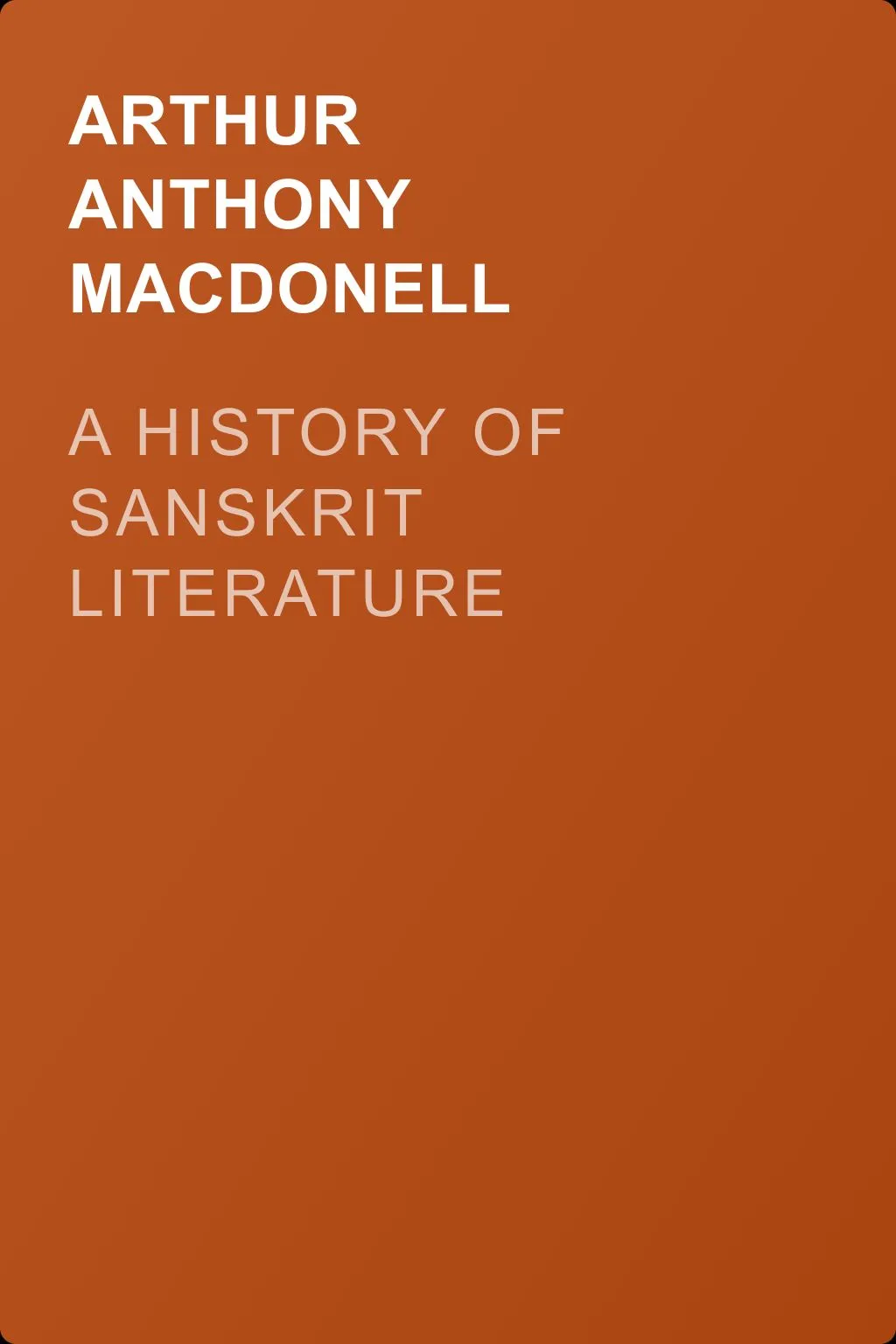
Страница 2 из 114Chapter I Introductory
Since the Renaissance there has been no event of such world-wide significance in the history of culture as the discovery of Sanskrit literature in the latter part of the eighteenth century. After Alexander’s invasion, the Greeks became to some extent acquainted with the learning of the Indians; the Arabs, in the Middle Ages, introduced the knowledge of Indian science to the West; a few European missionaries, from the sixteenth century onwards, were not only aware of the existence of, but also acquired some familiarity with, the ancient language of India; and Abraham Roger even translated the Sanskrit poet Bhartṛihari into Dutch as early as 1651. Nevertheless, till about a hundred and twenty years ago there was no authentic information in Europe about the existence of Sanskrit literature, but only vague surmise, finding expression in stories about the wisdom of the Indians. The enthusiasm with which Voltaire in his Essai sur les Mœurs et l’Esprit des Nations greeted the lore of the Ezour Vedam, a work brought from India and introduced to his notice in the middle of the last century, was premature. For this work was later proved to be a forgery made in the seventeenth century by a Jesuit missionary. The scepticism justified by this fabrication, and indulged in when the discovery of the genuine Sanskrit literature was announced, survived far into the present century. Thus, Dugald Stewart, the philosopher, wrote an essay in which he endeavoured to prove that not only Sanskrit literature, but also the Sanskrit language, was a forgery made by the crafty Brahmans on the model of Greek after Alexander’s conquest. Indeed, this view was elaborately defended by a professor at Dublin as late as the year 1838.
The first impulse to the study of Sanskrit was given by the practical administrative needs of our Indian possessions. Warren Hastings, at that time Governor-General, clearly seeing the advantage of ruling the Hindus as far as possible according to their own laws and customs, caused a number of Brahmans to prepare a digest based on the best ancient Indian legal authorities. An English version of this Sanskrit compilation, made through the medium of a Persian translation, was published in 1776. The introduction to this work, besides giving specimens of the Sanskrit script, for the first time supplied some trustworthy information about the ancient Indian language and literature. The earliest step, however, towards making Europe acquainted with actual Sanskrit writings was taken by Charles Wilkins, who, having, at the instigation of Warren Hastings, acquired a considerable knowledge of Sanskrit at Benares, published in 1785 a translation of the Bhagavad-gītā, or The Song of the Adorable One, and two years later, a version of the well-known collection of fables entitled Hitopadeça, or Friendly Advice.
Sir William Jones (1746–94) was, however, the pioneer of Sanskrit studies in the West. It was this brilliant and many-sided Orientalist who, during his too brief career of eleven years in India, first aroused a keen interest in the study of Indian antiquity by his unwearied literary activity and by the foundation of the Asiatic Society of Bengal in 1784. Having rapidly acquired an accurate knowledge of Sanskrit, he published in 1789 a translation of Çakuntalā, the finest Sanskrit drama, which was greeted with enthusiasm by such judges as Herder and Goethe. This was followed by a translation of the Code of Manu, the most important of the Sanskrit law-books. To Sir William Jones also belongs the credit of having been the first man who ever printed an edition of a Sanskrit text. This was a short lyrical poem entitled Ṛitusaṃhāra, or Cycle of the Seasons, published in 1792.
We next come to the great name of Henry Thomas Colebrooke (1765–1837), a man of extraordinary industry, combined with rare clearness of intellect and sobriety of judgment. The first to handle the Sanskrit language and literature on scientific principles, he published many texts, translations, and essays dealing with almost every branch of Sanskrit learning, thus laying the solid foundations on which later scholars have built.
While Colebrooke was beginning his literary career in India during the opening years of the century, the romance of war led to the practical knowledge of Sanskrit being introduced on the Continent of Europe. Alexander Hamilton (1765–1824), an Englishman who had acquired a good knowledge of Sanskrit in India, happened to be passing through France on his way home in 1802. Hostilities breaking out afresh just then, a decree of Napoleon, directed against all Englishmen in the country, kept Hamilton a prisoner in Paris. During his long involuntary stay in that city he taught Sanskrit to some French scholars, and especially to the German romantic poet Friedrich Schlegel. One of the results of these studies was the publication by Schlegel of his work On the Language and Wisdom of the Indians (1808). This book produced nothing less than a revolution in the science of language by the introduction of the comparative and the historical method. It led to the foundation of the science of comparative philology by Franz Bopp in his treatise on the conjugational system of Sanskrit in comparison with that of Greek, Latin, Persian, and German (1816). Schlegel’s work, moreover, aroused so much zeal for the study of Sanskrit in Germany, that the vast progress made since his day in this branch of learning has been mainly due to the labours of his countrymen.
In the early days of Sanskrit studies Europeans became acquainted only with that later phase of the ancient language of India which is familiar to the Pandits, and is commonly called Classical Sanskrit. So it came about that the literature composed in this dialect engaged the attention of scholars almost exclusively down to the middle of the century. Colebrooke had, it is true, supplied as early as 1805 valuable information about the literature of the older period in his essay On the Vedas. Nearly a quarter of a century later, F. Rosen, a German scholar, had conceived the plan of making this more ancient literature known to Europe from the rich collection of manuscripts at the East India House; and his edition of the first eighth of the Rigveda was actually brought out in 1838, shortly after his premature death. But it was not till Rudolf Roth (1821–95), the founder of Vedic philology, published his epoch-making little book On the Literature and History of the Veda in 1846, that the studies of Sanskritists received a lasting impulse in the direction of the earlier and more important literature of the Vedas. These studies have since been prosecuted with such zeal, that nearly all the most valuable works of the Vedic, as well as the later period, have within the last fifty years been made accessible in thoroughly trustworthy editions.
Вам также может понравиться
{"page":{"canonicalUrl":"https://bookra.app/books/49DxPZ5c","pageTitle":"A History of Sanskrit Literature (Arthur Anthony MacDonell) — полный текст, краткое содержание, анализ и герои","metaDescription":"Полный текст книги «A History of Sanskrit Literature». А также краткое содержание, главные мысли, конфликт, темы, персонажи, цитаты и ответы на вопросы.","headingTitle":"«A History of Sanskrit Literature». Читать бесплатно онлайн","headingSubtitle":"Arthur Anthony MacDonell","structuredData":[{"@context":"https://schema.org","@type":"BreadcrumbList","@id":"https://bookra.app/books/49DxPZ5c#breadcrumb","itemListElement":[{"@type":"ListItem","position":1,"name":"BookRa","item":"https://bookra.app/"},{"@type":"ListItem","position":2,"name":"зарубежная классика","item":"https://bookra.app/genre/5214"},{"@type":"ListItem","position":3,"name":"A History of Sanskrit Literature","item":"https://bookra.app/books/49DxPZ5c"}]},{"@context":"https://schema.org","@type":"WebPage","@id":"https://bookra.app/books/49DxPZ5c","url":"https://bookra.app/books/49DxPZ5c","name":"«A History of Sanskrit Literature». Читать бесплатно онлайн","description":"Полный текст книги «A History of Sanskrit Literature». А также краткое содержание, главные мысли, конфликт, темы, персонажи, цитаты и ответы на вопросы.","breadcrumb":{"@id":"https://bookra.app/books/49DxPZ5c#breadcrumb"},"mainEntity":{"@id":"https://bookra.app/books/49DxPZ5c#work"},"primaryImageOfPage":{"@type":"ImageObject","url":"https://storage.yandexcloud.net/bookra-catalog-pd-public/content/cc032784-3a87-11e9-aa86-0cc47a5453d6/thumbs/1200.webp"}},{"@context":"https://schema.org","@type":"Book","@id":"https://bookra.app/books/49DxPZ5c#work","name":"A History of Sanskrit Literature","url":"https://bookra.app/books/49DxPZ5c","description":"Полный текст книги «A History of Sanskrit Literature». А также краткое содержание, главные мысли, конфликт, темы, персонажи, цитаты и ответы на вопросы.","image":"https://storage.yandexcloud.net/bookra-catalog-pd-public/content/cc032784-3a87-11e9-aa86-0cc47a5453d6/thumbs/1200.webp","inLanguage":"en","genre":["зарубежная классика","зарубежная старинная литература"],"sameAs":["https://litres.ru/book/arthur-a-macdonell/a-history-of-sanskrit-literature-41260708/"],"author":[{"@type":"Person","@id":"https://bookra.app/author/0afb1189-08ea-11e3-866d-002590591ea6#person","name":"Arthur Anthony MacDonell","url":"https://bookra.app/author/0afb1189-08ea-11e3-866d-002590591ea6"}],"about":[{"@type":"Thing","name":"зарубежная классика"},{"@type":"Thing","name":"зарубежная старинная литература"},{"@type":"Thing","name":"чтение онлайн"},{"@type":"Thing","name":"саммари"},{"@type":"Thing","name":"AI-разбор"},{"@type":"Thing","name":"персонажи"},{"@type":"Thing","name":"цитаты"}],"workExample":{"@type":"Book","@id":"https://bookra.app/books/49DxPZ5c#edition","url":"https://bookra.app/books/49DxPZ5c","bookFormat":"https://schema.org/EBook","inLanguage":"en","sameAs":["https://litres.ru/book/arthur-a-macdonell/a-history-of-sanskrit-literature-41260708/"],"isAccessibleForFree":true,"potentialAction":{"@type":"ReadAction","name":"Читать бесплатно онлайн «A History of Sanskrit Literature»","target":{"@type":"EntryPoint","urlTemplate":"https://bookra.app/books/49DxPZ5c","actionPlatform":["https://schema.org/DesktopWebPlatform"]},"expectsAcceptanceOf":{"@type":"Offer","category":"nologinrequired"}}}}],"book":{"idCatalog":765570,"shortId":"49DxPZ5c","title":"A History of Sanskrit Literature","coverUrl":"https://storage.yandexcloud.net/bookra-catalog-pd-public/content/cc032784-3a87-11e9-aa86-0cc47a5453d6/thumbs/1200.webp","annotationText":"","catalogType":"PUBLIC_DOMAIN","catalogTypeLabel":"Общественное достояние","authorLine":"Arthur Anthony MacDonell","authors":[{"id":"0afb1189-08ea-11e3-866d-002590591ea6","displayName":"Arthur Anthony MacDonell","protectedUrl":"/author/0afb1189-08ea-11e3-866d-002590591ea6","wikipediaUrl":null,"wikidataUrl":null}],"genres":[{"id":5214,"title":"зарубежная классика","token":null,"publicUrl":"https://bookra.app/genre/5214"},{"id":5215,"title":"зарубежная старинная литература","token":null,"publicUrl":"https://bookra.app/genre/5215"}],"keywords":[],"facts":[{"key":"dateWritten","label":"Дата написания","value":"1970-01-01"},{"key":"bookLanguage","label":"Язык книги","value":"en"},{"key":"adult","label":"Возрастное ограничение","value":"0+"}],"seoSections":[],"authorSummary":null,"hasArtifacts":false,"canReadInApp":true,"readUrl":"https://web.bookra.app/?startapp=r_765570","artifactsUrl":"https://web.bookra.app/?startapp=b_765570","readCtaLabel":"Читать бесплатно","artifactsCtaLabel":"AI-разбор","appReadLinks":{"tg":"https://t.me/bookra_lib_bot/BookRa?startapp=r_765570","vk":"https://vk.com/app54470698#startapp=r_765570","max":"https://max.ru/id7751370047_bot?startapp=r_765570","web":"https://web.bookra.app/?startapp=r_765570"},"appAnalysisLinks":{"tg":"https://t.me/bookra_lib_bot/BookRa?startapp=b_765570","vk":"https://vk.com/app54470698#startapp=b_765570","max":"https://max.ru/id7751370047_bot?startapp=b_765570","web":"https://web.bookra.app/?startapp=b_765570"},"guestReaderUrl":"/books/49DxPZ5c?page=2#reader-content","authorCtaLabel":"Все книги автора","authorProtectedUrl":"/author/0afb1189-08ea-11e3-866d-002590591ea6","readersCount":0,"adultLabel":"0+","yearLabel":null,"datePublished":null,"publisherLabel":null,"isbn":null,"oclc":null,"lccn":null,"partnerUrl":null,"accessNote":"Полный текст книги и AI-разбор откроются на защищенных страницах BookRa после входа."},"reader":{"page":2,"totalPages":114,"hasPrev":true,"hasNext":true,"prevPageUrl":"/books/49DxPZ5c#reader-content","nextPageUrl":"/books/49DxPZ5c?page=3#reader-content","progressLabel":"Страница 2 из 114","sections":[{"id":"content0:14","kind":"heading","text":"Chapter I Introductory"},{"id":"content0:15","kind":"paragraph","text":"Since the Renaissance there has been no event of such world-wide significance in the history of culture as the discovery of Sanskrit literature in the latter part of the eighteenth century. After Alexander’s invasion, the Greeks became to some extent acquainted with the learning of the Indians; the Arabs, in the Middle Ages, introduced the knowledge of Indian science to the West; a few European missionaries, from the sixteenth century onwards, were not only aware of the existence of, but also acquired some familiarity with, the ancient language of India; and Abraham Roger even translated the Sanskrit poet Bhartṛihari into Dutch as early as 1651. Nevertheless, till about a hundred and twenty years ago there was no authentic information in Europe about the existence of Sanskrit literature, but only vague surmise, finding expression in stories about the wisdom of the Indians. The enthusiasm with which Voltaire in his Essai sur les Mœurs et l’Esprit des Nations greeted the lore of the Ezour Vedam, a work brought from India and introduced to his notice in the middle of the last century, was premature. For this work was later proved to be a forgery made in the seventeenth century by a Jesuit missionary. The scepticism justified by this fabrication, and indulged in when the discovery of the genuine Sanskrit literature was announced, survived far into the present century. Thus, Dugald Stewart, the philosopher, wrote an essay in which he endeavoured to prove that not only Sanskrit literature, but also the Sanskrit language, was a forgery made by the crafty Brahmans on the model of Greek after Alexander’s conquest. Indeed, this view was elaborately defended by a professor at Dublin as late as the year 1838."},{"id":"content0:16","kind":"paragraph","text":"The first impulse to the study of Sanskrit was given by the practical administrative needs of our Indian possessions. Warren Hastings, at that time Governor-General, clearly seeing the advantage of ruling the Hindus as far as possible according to their own laws and customs, caused a number of Brahmans to prepare a digest based on the best ancient Indian legal authorities. An English version of this Sanskrit compilation, made through the medium of a Persian translation, was published in 1776. The introduction to this work, besides giving specimens of the Sanskrit script, for the first time supplied some trustworthy information about the ancient Indian language and literature. The earliest step, however, towards making Europe acquainted with actual Sanskrit writings was taken by Charles Wilkins, who, having, at the instigation of Warren Hastings, acquired a considerable knowledge of Sanskrit at Benares, published in 1785 a translation of the Bhagavad-gītā, or The Song of the Adorable One, and two years later, a version of the well-known collection of fables entitled Hitopadeça, or Friendly Advice."},{"id":"content0:17","kind":"paragraph","text":"Sir William Jones (1746–94) was, however, the pioneer of Sanskrit studies in the West. It was this brilliant and many-sided Orientalist who, during his too brief career of eleven years in India, first aroused a keen interest in the study of Indian antiquity by his unwearied literary activity and by the foundation of the Asiatic Society of Bengal in 1784. Having rapidly acquired an accurate knowledge of Sanskrit, he published in 1789 a translation of Çakuntalā, the finest Sanskrit drama, which was greeted with enthusiasm by such judges as Herder and Goethe. This was followed by a translation of the Code of Manu, the most important of the Sanskrit law-books. To Sir William Jones also belongs the credit of having been the first man who ever printed an edition of a Sanskrit text. This was a short lyrical poem entitled Ṛitusaṃhāra, or Cycle of the Seasons, published in 1792."},{"id":"content0:18","kind":"paragraph","text":"We next come to the great name of Henry Thomas Colebrooke (1765–1837), a man of extraordinary industry, combined with rare clearness of intellect and sobriety of judgment. The first to handle the Sanskrit language and literature on scientific principles, he published many texts, translations, and essays dealing with almost every branch of Sanskrit learning, thus laying the solid foundations on which later scholars have built."},{"id":"content0:19","kind":"paragraph","text":"While Colebrooke was beginning his literary career in India during the opening years of the century, the romance of war led to the practical knowledge of Sanskrit being introduced on the Continent of Europe. Alexander Hamilton (1765–1824), an Englishman who had acquired a good knowledge of Sanskrit in India, happened to be passing through France on his way home in 1802. Hostilities breaking out afresh just then, a decree of Napoleon, directed against all Englishmen in the country, kept Hamilton a prisoner in Paris. During his long involuntary stay in that city he taught Sanskrit to some French scholars, and especially to the German romantic poet Friedrich Schlegel. One of the results of these studies was the publication by Schlegel of his work On the Language and Wisdom of the Indians (1808). This book produced nothing less than a revolution in the science of language by the introduction of the comparative and the historical method. It led to the foundation of the science of comparative philology by Franz Bopp in his treatise on the conjugational system of Sanskrit in comparison with that of Greek, Latin, Persian, and German (1816). Schlegel’s work, moreover, aroused so much zeal for the study of Sanskrit in Germany, that the vast progress made since his day in this branch of learning has been mainly due to the labours of his countrymen."},{"id":"content0:20","kind":"paragraph","text":"In the early days of Sanskrit studies Europeans became acquainted only with that later phase of the ancient language of India which is familiar to the Pandits, and is commonly called Classical Sanskrit. So it came about that the literature composed in this dialect engaged the attention of scholars almost exclusively down to the middle of the century. Colebrooke had, it is true, supplied as early as 1805 valuable information about the literature of the older period in his essay On the Vedas. Nearly a quarter of a century later, F. Rosen, a German scholar, had conceived the plan of making this more ancient literature known to Europe from the rich collection of manuscripts at the East India House; and his edition of the first eighth of the Rigveda was actually brought out in 1838, shortly after his premature death. But it was not till Rudolf Roth (1821–95), the founder of Vedic philology, published his epoch-making little book On the Literature and History of the Veda in 1846, that the studies of Sanskritists received a lasting impulse in the direction of the earlier and more important literature of the Vedas. These studies have since been prosecuted with such zeal, that nearly all the most valuable works of the Vedic, as well as the later period, have within the last fifty years been made accessible in thoroughly trustworthy editions."}],"toc":[{"id":"content0:0:1","label":"Arthur Anthony Macdonell A History of Sanskrit Literature","page":1,"pageUrl":"/books/49DxPZ5c#reader-content"},{"id":"content0:1:1","label":"Preface","page":1,"pageUrl":"/books/49DxPZ5c#reader-content"},{"id":"content0:14:2","label":"Chapter I Introductory","page":2,"pageUrl":"/books/49DxPZ5c?page=2#reader-content"},{"id":"content1:0:8","label":"Chapter II The Vedic Period","page":8,"pageUrl":"/books/49DxPZ5c?page=8#reader-content"},{"id":"content2:0:11","label":"Chapter III The Rigveda","page":11,"pageUrl":"/books/49DxPZ5c?page=11#reader-content"},{"id":"content3:0:16","label":"Chapter IV Poetry of the Rigveda","page":16,"pageUrl":"/books/49DxPZ5c?page=16#reader-content"},{"id":"content4:0:30","label":"Chapter V Philosophy of the Rigveda","page":30,"pageUrl":"/books/49DxPZ5c?page=30#reader-content"},{"id":"content5:0:35","label":"Chapter VI The Rigvedic Age","page":35,"pageUrl":"/books/49DxPZ5c?page=35#reader-content"},{"id":"content6:0:43","label":"Chapter VII The Later Vedas","page":43,"pageUrl":"/books/49DxPZ5c?page=43#reader-content"},{"id":"content7:0:50","label":"Chapter VIII The Brāhmaṇas","page":50,"pageUrl":"/books/49DxPZ5c?page=50#reader-content"},{"id":"content7:1:50","label":"(Circa 800–500 B.C.)","page":50,"pageUrl":"/books/49DxPZ5c?page=50#reader-content"},{"id":"content8:0:61","label":"Chapter IX The Sūtras","page":61,"pageUrl":"/books/49DxPZ5c?page=61#reader-content"},{"id":"content8:1:61","label":"(Circa 500–200 B.C.)","page":61,"pageUrl":"/books/49DxPZ5c?page=61#reader-content"},{"id":"content9:0:69","label":"Chapter X The Epics","page":69,"pageUrl":"/books/49DxPZ5c?page=69#reader-content"},{"id":"content9:1:69","label":"(Circa 500–50 B.C.)","page":69,"pageUrl":"/books/49DxPZ5c?page=69#reader-content"},{"id":"content9:53:74","label":"The Purāṇas","page":74,"pageUrl":"/books/49DxPZ5c?page=74#reader-content"},{"id":"content9:67:75","label":"The Rāmāyaṇa","page":75,"pageUrl":"/books/49DxPZ5c?page=75#reader-content"},{"id":"content10:0:79","label":"Chapter XI Kāvya or Court Epic","page":79,"pageUrl":"/books/49DxPZ5c?page=79#reader-content"},{"id":"content10:1:79","label":"(Circa 200 B.C.–1100 A.D.)","page":79,"pageUrl":"/books/49DxPZ5c?page=79#reader-content"},{"id":"content11:0:83","label":"Chapter XII Lyric Poetry (Circa 400–1100 A.D.)","page":83,"pageUrl":"/books/49DxPZ5c?page=83#reader-content"},{"id":"content12:0:85","label":"Chapter XIII The Drama","page":85,"pageUrl":"/books/49DxPZ5c?page=85#reader-content"},{"id":"content12:1:85","label":"(Circa 400–1000 A.D.)","page":85,"pageUrl":"/books/49DxPZ5c?page=85#reader-content"},{"id":"content13:0:91","label":"Chapter XIV Fairy Tales and Fables","page":91,"pageUrl":"/books/49DxPZ5c?page=91#reader-content"},{"id":"content13:1:91","label":"(Circa 400–1100 A.D.)","page":91,"pageUrl":"/books/49DxPZ5c?page=91#reader-content"},{"id":"content13:30:93","label":"Ethical Poetry","page":93,"pageUrl":"/books/49DxPZ5c?page=93#reader-content"},{"id":"content14:0:95","label":"Chapter XV Philosophy","page":95,"pageUrl":"/books/49DxPZ5c?page=95#reader-content"},{"id":"content15:0:101","label":"Chapter XVI Sanskrit Literature and the West","page":101,"pageUrl":"/books/49DxPZ5c?page=101#reader-content"},{"id":"content16:0:106","label":"Appendix on Technical Literature","page":106,"pageUrl":"/books/49DxPZ5c?page=106#reader-content"},{"id":"content17:0:108","label":"Bibliographical Notes","page":108,"pageUrl":"/books/49DxPZ5c?page=108#reader-content"},{"id":"content17:1:108","label":"Chapter I","page":108,"pageUrl":"/books/49DxPZ5c?page=108#reader-content"},{"id":"content17:4:109","label":"Chapter III","page":109,"pageUrl":"/books/49DxPZ5c?page=109#reader-content"},{"id":"content17:6:109","label":"Chapters IV. and V","page":109,"pageUrl":"/books/49DxPZ5c?page=109#reader-content"},{"id":"content17:8:109","label":"Chapter VI","page":109,"pageUrl":"/books/49DxPZ5c?page=109#reader-content"},{"id":"content17:10:109","label":"Chapter VII","page":109,"pageUrl":"/books/49DxPZ5c?page=109#reader-content"},{"id":"content17:12:109","label":"Chapter VIII","page":109,"pageUrl":"/books/49DxPZ5c?page=109#reader-content"},{"id":"content17:14:110","label":"Chapter IX","page":110,"pageUrl":"/books/49DxPZ5c?page=110#reader-content"},{"id":"content17:16:110","label":"Chapter X","page":110,"pageUrl":"/books/49DxPZ5c?page=110#reader-content"},{"id":"content17:18:111","label":"Chapter XI","page":111,"pageUrl":"/books/49DxPZ5c?page=111#reader-content"},{"id":"content17:20:111","label":"Chapter XII","page":111,"pageUrl":"/books/49DxPZ5c?page=111#reader-content"},{"id":"content17:22:112","label":"Chapter XIII","page":112,"pageUrl":"/books/49DxPZ5c?page=112#reader-content"},{"id":"content17:24:112","label":"Chapter XIV","page":112,"pageUrl":"/books/49DxPZ5c?page=112#reader-content"},{"id":"content17:26:113","label":"Chapter XV","page":113,"pageUrl":"/books/49DxPZ5c?page=113#reader-content"},{"id":"content17:28:113","label":"Chapter XVI","page":113,"pageUrl":"/books/49DxPZ5c?page=113#reader-content"},{"id":"contentnotes0:0:114","label":"1","page":114,"pageUrl":"/books/49DxPZ5c?page=114#reader-content"},{"id":"contentnotes0:3:114","label":"2","page":114,"pageUrl":"/books/49DxPZ5c?page=114#reader-content"},{"id":"contentnotes0:6:114","label":"3","page":114,"pageUrl":"/books/49DxPZ5c?page=114#reader-content"},{"id":"contentnotes0:9:114","label":"4","page":114,"pageUrl":"/books/49DxPZ5c?page=114#reader-content"},{"id":"contentnotes0:12:114","label":"5","page":114,"pageUrl":"/books/49DxPZ5c?page=114#reader-content"},{"id":"contentnotes0:15:114","label":"6","page":114,"pageUrl":"/books/49DxPZ5c?page=114#reader-content"},{"id":"contentnotes0:18:114","label":"7","page":114,"pageUrl":"/books/49DxPZ5c?page=114#reader-content"},{"id":"contentnotes0:21:114","label":"8","page":114,"pageUrl":"/books/49DxPZ5c?page=114#reader-content"},{"id":"contentnotes0:24:114","label":"9","page":114,"pageUrl":"/books/49DxPZ5c?page=114#reader-content"},{"id":"contentnotes0:27:114","label":"10","page":114,"pageUrl":"/books/49DxPZ5c?page=114#reader-content"},{"id":"contentnotes0:31:114","label":"11","page":114,"pageUrl":"/books/49DxPZ5c?page=114#reader-content"},{"id":"contentnotes0:34:114","label":"12","page":114,"pageUrl":"/books/49DxPZ5c?page=114#reader-content"},{"id":"contentnotes0:37:114","label":"13","page":114,"pageUrl":"/books/49DxPZ5c?page=114#reader-content"},{"id":"contentnotes0:40:114","label":"14","page":114,"pageUrl":"/books/49DxPZ5c?page=114#reader-content"}]},"similarBooks":[{"idCatalog":787516,"shortId":"038AHbna","title":"Человек-зверь","authorLine":"Эмиль Золя, В. Ранцова","primaryAuthorId":"82d512ee-2a82-102a-9ae1-2dfe723fe7c7","coverUrl":"https://storage.yandexcloud.net/bookra-catalog-pd-public/content/46378965-70f6-41f4-9510-013fea11211d/thumbs/400.webp","publicUrl":"https://bookra.app/books/038AHbna"},{"idCatalog":7183,"shortId":"4SSnge7p","title":"Фараон","authorLine":"Болеслав Прус, Е. Н. Троповский","primaryAuthorId":"dcbe6513-2a81-102a-9ae1-2dfe723fe7c7","coverUrl":"https://storage.yandexcloud.net/bookra-catalog-litres-public/content/32aeea09-f542-4c48-ba6c-1464e0288595/thumbs/400.webp","publicUrl":"https://bookra.app/books/4SSnge7p"},{"idCatalog":521096,"shortId":"39RurXks","title":"Хагакурэ, или Сокрытое в листве","authorLine":"Цунэтомо Ямамото, Сергей И. Логачев","primaryAuthorId":"292e10ef-2a83-102a-9ae1-2dfe723fe7c7","coverUrl":"https://storage.yandexcloud.net/bookra-catalog-litres-public/content/d2c8ca1b-24e9-11ee-8496-0cc47af30fe4/thumbs/400.webp","publicUrl":"https://bookra.app/books/39RurXks"},{"idCatalog":790354,"shortId":"08oOsnCu","title":"Сон в летнюю ночь","authorLine":"Уильям Шекспир, Николай Михайлович Сатин","primaryAuthorId":"c577ea96-2a81-102a-9ae1-2dfe723fe7c7","coverUrl":"https://storage.yandexcloud.net/bookra-catalog-pd-public/content/9cb6e365-8043-11e7-af8e-0cc47a1952f2/thumbs/400.webp","publicUrl":"https://bookra.app/books/08oOsnCu"},{"idCatalog":788220,"shortId":"0Tjejja2","title":"Нана","authorLine":"Эмиль Золя, Т. Иринова","primaryAuthorId":"82d512ee-2a82-102a-9ae1-2dfe723fe7c7","coverUrl":"https://storage.yandexcloud.net/bookra-catalog-pd-public/content/5a387752-aafd-4f3d-bb91-627dfd767da4/thumbs/400.webp","publicUrl":"https://bookra.app/books/0Tjejja2"},{"idCatalog":577406,"shortId":"0q0GFNSG","title":"Золотой осел","authorLine":"Луций Апулей, Михаил Алексеевич Кузмин","primaryAuthorId":"673278e9-2a98-102a-9ac3-800cba805322","coverUrl":"https://storage.yandexcloud.net/bookra-catalog-litres-public/content/c0602770-11db-11ef-8496-0cc47af30fe4/thumbs/400.webp","publicUrl":"https://bookra.app/books/0q0GFNSG"},{"idCatalog":763844,"shortId":"0k1CVPMc","title":"Ромео и Джульетта","authorLine":"Уильям Шекспир, Дмитрий Лаврентьевич Михаловский","primaryAuthorId":"c577ea96-2a81-102a-9ae1-2dfe723fe7c7","coverUrl":"https://storage.yandexcloud.net/bookra-catalog-pd-public/content/8c3c1916-803a-11e7-8179-0cc47a520474/thumbs/400.webp","publicUrl":"https://bookra.app/books/0k1CVPMc"},{"idCatalog":766049,"shortId":"4TrGYIUx","title":"Гамлет, принц Датский","authorLine":"Уильям Шекспир, Петр Петрович Гнедич","primaryAuthorId":"c577ea96-2a81-102a-9ae1-2dfe723fe7c7","coverUrl":"https://storage.yandexcloud.net/bookra-catalog-pd-public/content/e925d796-803b-11e7-af8e-0cc47a1952f2/thumbs/400.webp","publicUrl":"https://bookra.app/books/4TrGYIUx"},{"idCatalog":46756,"shortId":"1wKz5vUM","title":"Монахиня","authorLine":"Дени Дидро, Дебора Григорьевна Лившиц","primaryAuthorId":"b1401df8-2a93-102a-9ac3-800cba805322","coverUrl":"https://storage.yandexcloud.net/bookra-catalog-litres-public/content/37ba23fd-6a81-102c-a19b-edc40df1930e/thumbs/400.webp","publicUrl":"https://bookra.app/books/1wKz5vUM"},{"idCatalog":788440,"shortId":"0L94UZhC","title":"Доктор Паскаль","authorLine":"Эмиль Золя, Константин Григорьевич Локс","primaryAuthorId":"82d512ee-2a82-102a-9ae1-2dfe723fe7c7","coverUrl":"https://storage.yandexcloud.net/bookra-catalog-pd-public/content/61f13980-8201-4459-bcd1-e04d976a5570/thumbs/400.webp","publicUrl":"https://bookra.app/books/0L94UZhC"},{"idCatalog":11697,"shortId":"2MoUDOAh","title":"Сон в красном тереме. Том 1","authorLine":"Лев Николаевич Меньшиков, Владимир Андреевич Панасюк, Цао Сюэцинь","primaryAuthorId":"4e036549-1455-11e8-a22f-0cc47a5454c6","coverUrl":"https://storage.yandexcloud.net/bookra-catalog-litres-public/content/c9377cb2-c07d-4c18-a638-1db65e2e0cf2/thumbs/400.webp","publicUrl":"https://bookra.app/books/2MoUDOAh"},{"idCatalog":792368,"shortId":"4ft6F5H0","title":"Саламбо","authorLine":"Гюстав Флобер, Николай Максимович Минский","primaryAuthorId":"526ac12b-2a82-102a-9ae1-2dfe723fe7c7","coverUrl":"https://storage.yandexcloud.net/bookra-catalog-pd-public/content/d8927887-c0aa-11e0-9959-47117d41cf4b/thumbs/400.webp","publicUrl":"https://bookra.app/books/4ft6F5H0"}],"similarBooksPagination":{"page":1,"pageSize":12,"totalItems":2333,"totalPages":195,"hasPrev":false,"hasNext":true}},"notFound":false}